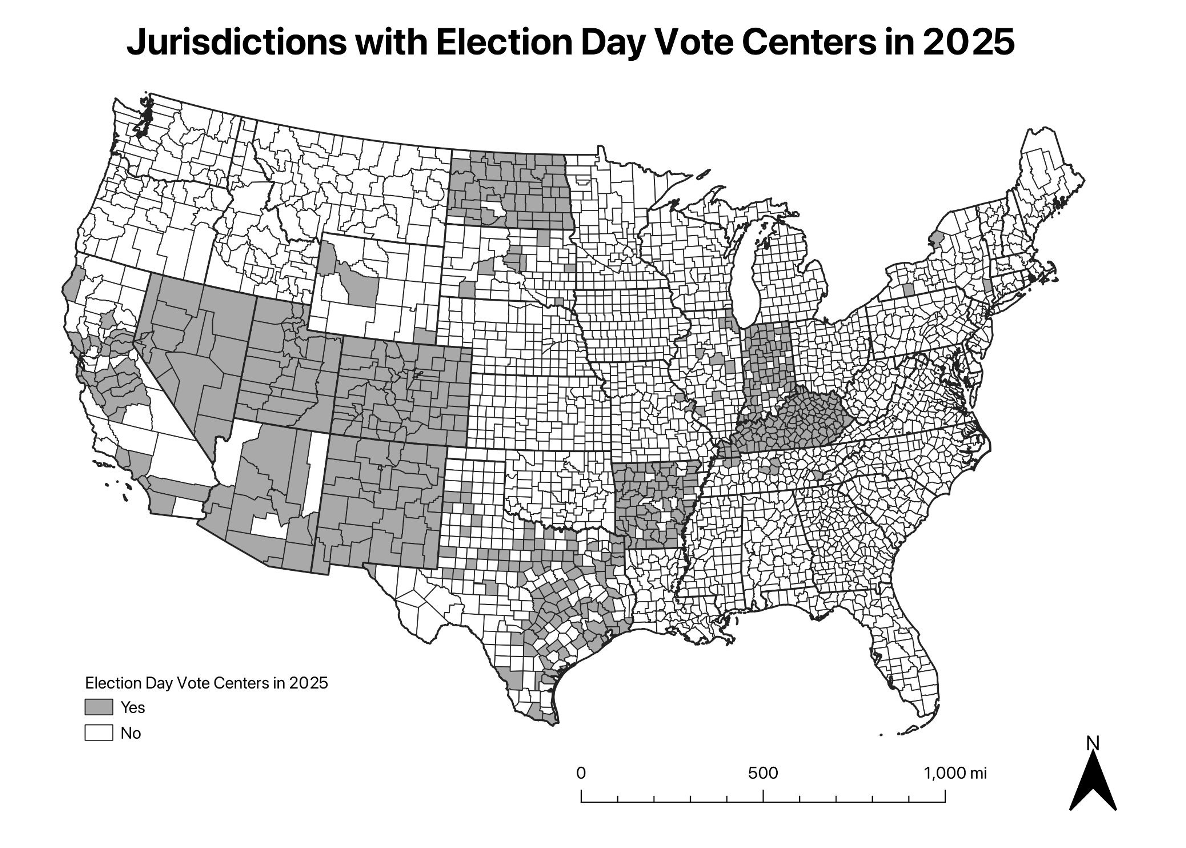
Administrative Efficiency
Vote centers dramatically reduce the operational footprint of election administration.
Jurisdictions report roughly half as many physical polling locations to staff and
maintain, and corresponding reductions in poll worker recruitment needs.
Provisional Ballot Reduction
Because vote centers eliminate "wrong precinct" errors, jurisdictions see sharp
reductions in both the number of provisional ballots cast and the share of
provisionals that are ultimately rejected.
Voter Location Experience
Survey data from 2024 show that vote center users reported somewhat less ease
locating their polling place compared to precinct voters — an important equity
and communication consideration for implementing jurisdictions.
Implementation Quality Matters
The research finds that vote centers prove most effective in larger jurisdictions
and when paired with robust voter communication. Access and equity require ongoing
attention, particularly for voters with limited transportation or information access.